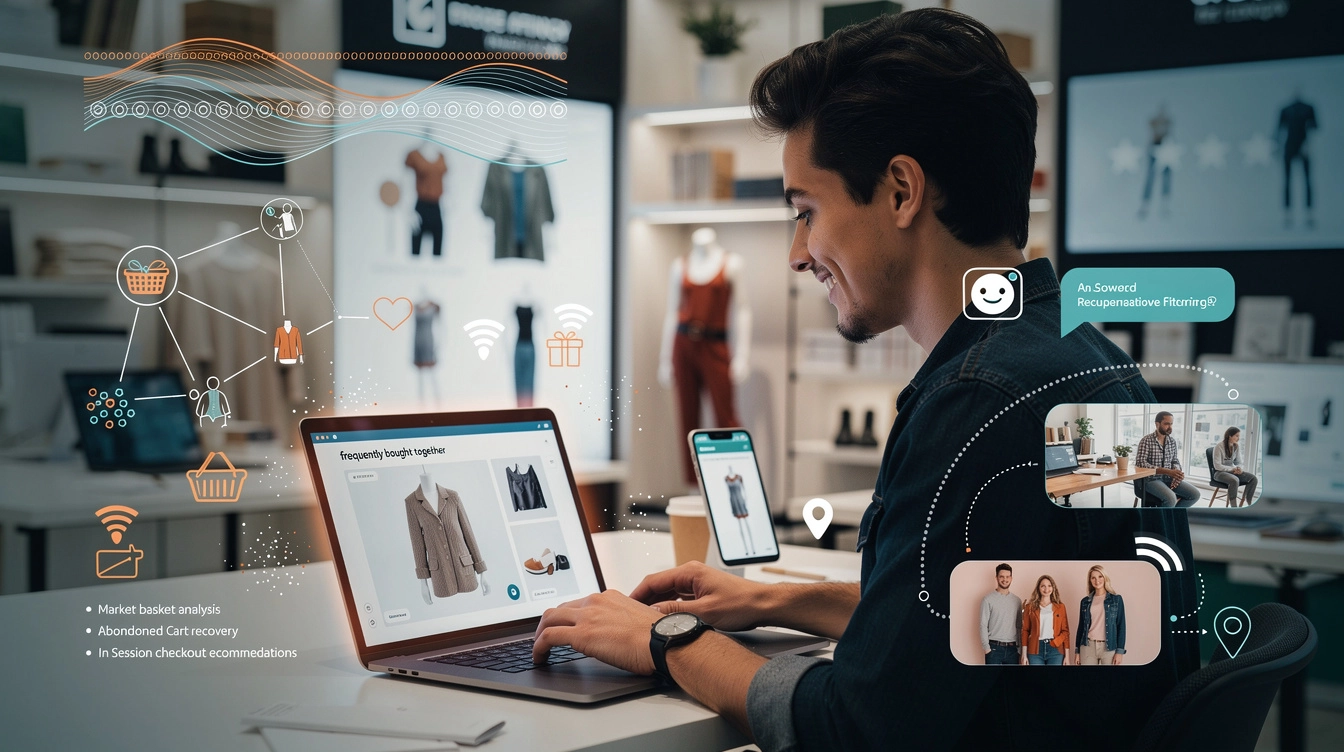
In today’s hyper-competitive retail landscape, cross-selling has evolved from a simple sales tactic into a sophisticated art form that balances commercial objectives with genuine customer service. When executed thoughtfully, cross-selling doesn’t feel like a pushy sales technique—it feels like helpful guidance from a trusted advisor. The difference between success and failure lies in understanding the psychological principles that govern consumer decision-making and applying data-driven insights to deliver recommendations that genuinely enhance the customer experience. Modern businesses are discovering that the most effective cross-selling strategies are those that seamlessly integrate into the customer journey, appearing at precisely the right moment with exactly the right offer, creating what customers perceive as serendipitous discovery rather than calculated manipulation.
Behavioural psychology principles behind Non-Intrusive product recommendations
The foundation of natural-feeling cross-selling lies in understanding how the human brain processes purchasing decisions. Behavioural psychology offers invaluable insights into why certain recommendation strategies feel helpful while others trigger resistance. When you align your cross-selling approach with innate cognitive patterns, customers experience suggestions as thoughtful curation rather than aggressive selling. Research consistently demonstrates that consumers are significantly more receptive to product recommendations that respect their decision-making autonomy while gently guiding them toward complementary purchases that genuinely solve problems or enhance their original purchase.
Cognitive fluency and the mere exposure effect in complementary product displays
Cognitive fluency refers to the ease with which information is processed by the brain, and it plays a crucial role in purchasing decisions. When complementary products are displayed in ways that require minimal mental effort to understand their relationship, conversion rates increase substantially. The mere exposure effect—our tendency to develop preferences for things we encounter repeatedly—works powerfully in cross-selling contexts. By strategically positioning complementary products throughout the customer journey, you create familiarity without overwhelming the buyer. Studies show that customers exposed to product pairings three to five times are 47% more likely to purchase both items compared to single-exposure scenarios. The key is making these exposures feel natural rather than repetitive, varying the context and presentation while maintaining consistent messaging about how products work together.
Reciprocity bias: leveraging Value-First interactions before Cross-Sell offers
The principle of reciprocity—our innate tendency to return favours—provides a powerful framework for natural cross-selling. When you provide genuine value before making a recommendation, customers feel a subtle obligation to reciprocate by considering your suggestion seriously. This might manifest as offering free educational content, helpful product guides, or complimentary services that solve immediate problems. A study by the Journal of Consumer Research found that customers who received value-first interactions were 64% more likely to accept cross-sell recommendations. The critical distinction is that the value must be genuinely helpful and not simply a thinly veiled sales pitch. For example, providing a comprehensive care guide for a purchased item, then naturally suggesting complementary products mentioned within that guide, feels helpful rather than opportunistic.
Choice architecture and nudge theory applications in retail environments
Choice architecture—the practice of organizing contexts in which people make decisions—offers sophisticated tools for natural cross-selling. Nobel laureate Richard Thaler’s nudge theory demonstrates that subtle changes in how options are presented can significantly influence decisions without restricting choice. In cross-selling contexts, this means structuring product displays, checkout flows, and recommendation algorithms to make complementary purchases the path of least resistance while never forcing the issue. Effective choice architecture might involve positioning the most frequently purchased product combinations at eye level, using visual cues to connect related products, or defaulting to bundles while making individual purchases equally accessible. Research indicates that well-designed choice architecture can increase complementary product purchases by 35-50% without customers feeling manipulated, primarily because the arrangement feels intuitive rather than contrived.
Social proof integration through User-Generated content and purchase patterns
Social proof—our tendency to look to others’ behaviour when making decisions—is perhaps the most powerful psychological lever in natural cross-selling. When you demonstrate that other customers with similar needs have purchased specific product combinations, recommendations feel less like sales pitches and more like crowd-sourced wisdom. Displaying real purchase patterns, authentic customer reviews of product combinations, and user-generated content showing products used together creates compelling validation.
This might take the form of a simple note like “82% of shoppers bought these three items together” under a bundle, or showcasing Instagram photos of customers styling a jacket with specific shoes and accessories. In both cases, social proof reduces perceived risk by signalling that the cross-sell is normal, popular behaviour rather than an experimental purchase. To keep this type of cross-selling strategy feeling natural, highlight a small number of highly rated complementary products, prioritise authentic reviews over polished marketing copy, and update examples regularly so they reflect current purchase patterns and seasonal needs.
Data-driven product affinity mapping and collaborative filtering techniques
While behavioural psychology explains why natural cross-selling works, data science determines what you should recommend to each customer at any given moment. Modern retailers use product affinity mapping and collaborative filtering to uncover patterns that are impossible to spot manually. Instead of guessing which products go together, you analyse millions of transactions to see which items are frequently bought together, in what order, and by which types of customers. When you combine these insights with your understanding of customer intent, you move from generic cross-sell banners to highly personalised, context-aware recommendations that feel almost eerily accurate.
Amazon’s Item-to-Item collaborative filtering algorithm framework
Amazon popularised item-to-item collaborative filtering, a recommendation framework that focuses on relationships between products rather than similarities between users. Instead of trying to build complex user profiles, the algorithm asks a simpler question: “Given that someone is looking at or has purchased item X, what other items have historically been purchased or viewed by people who interacted with X?” This approach is both scalable and resilient, which is why it powers much of Amazon’s cross-selling and “Customers who bought this item also bought” experiences.
For smaller retailers, you don’t need to replicate Amazon’s infrastructure to apply the same logic. Most ecommerce platforms and analytics tools can export basic co-occurrence data showing which SKUs appear together in orders. From there, you can create rule-based recommendations such as “If product A is in the cart, highlight products B and C.” The key to keeping these recommendations natural is to limit them to highly correlated pairings—ideally those with strong historical conversion rates—rather than filling every page with loosely related items that dilute relevance.
Market basket analysis using apriori and FP-Growth association rules
Market basket analysis takes product affinity mapping a step further by using algorithms like Apriori and FP-Growth to discover association rules in your transaction data. At its core, this method looks for patterns such as “70% of customers who buy item A and item B also buy item C.” These rules are quantified using metrics such as support (how often the combination appears), confidence (how likely C is given A and B), and lift (how much more likely the combination is than random chance). When support and confidence are both high, you’ve found a powerful cross-selling opportunity that feels logical to customers because it mirrors how people naturally shop.
Imagine you discover that customers who buy a DSLR camera and a tripod are highly likely to purchase a specific camera bag within 30 days. Rather than pushing that bag randomly, you can surface it as a “Complete your kit” bundle on product pages and in post-purchase emails. In practice, market basket analysis can be implemented using open-source libraries in Python or R, or via analytics features built into many modern ecommerce platforms. The most natural-feeling cross-selling use cases focus on bundles that clearly solve a complete problem—such as “home office setup” or “beginner baking kit”—rather than arbitrary product groupings assembled purely for margin.
RFM segmentation models for personalised Cross-Sell targeting
RFM segmentation—based on Recency, Frequency, and Monetary value—helps you decide who to approach with cross-sell offers and how assertive you can afford to be. Customers who purchased very recently, buy frequently, and have a high average order value are often your best candidates for curated bundles and higher-priced add-ons. In contrast, one-time, low-spend customers may respond better to low-friction, low-cost cross-sell items that feel like easy upgrades instead of major commitments. By grouping customers into RFM segments, you can tailor both the products and the tone of your cross-selling campaigns.
For example, a high-RFM segment might receive a personalised email like, “You’ve built an impressive home gym—here are three pieces our top customers add next,” while a low-RFM segment sees a gentle nudge such as, “Liked your purchase? Here’s a small add-on to make it even better.” This segmentation also protects you from over-messaging: you can cap the frequency of cross-sell offers to vulnerable segments, such as lapsed or dissatisfied customers, and prioritise value-first content instead. In doing so, you maintain trust while still using data-driven cross-selling strategies to increase customer lifetime value over time.
Neural networks and deep learning for predictive product pairing
As datasets grow larger and customer journeys become more complex, many retailers are turning to neural networks and deep learning to predict cross-sell opportunities that go beyond simple co-purchase patterns. Models such as recurrent neural networks (RNNs) and sequence-based recommendation architectures can analyse the order in which products are browsed and purchased, similar to how language models analyse sequences of words. Instead of treating each order as an isolated “basket,” these models consider the full purchase history as an evolving story, allowing them to anticipate the “next best product” in a way that feels personalised and timely.
In practice, you might train a model to predict which accessories a customer will want after buying a flagship smartphone, taking into account their previous purchases, preferred price points, and even device ecosystem. While implementing deep learning requires more technical expertise, many cloud providers and SaaS recommendation engines now package this technology into accessible APIs. To keep AI-powered cross-selling feeling natural, it’s wise to combine predictions with simple business rules—such as excluding out-of-stock items, respecting category preferences, and limiting the number of recommendations—so the output feels curated rather than machine-generated noise.
Contextual timing strategies across the customer journey touchpoints
Even the smartest product recommendations can feel intrusive if they appear at the wrong time, in the wrong place, or in the wrong format. Natural cross-selling isn’t just about what you suggest; it’s about when and how you introduce those suggestions. By mapping cross-sell opportunities to specific customer journey touchpoints—pre-purchase, in-session, and post-purchase—you create a rhythm of helpful suggestions that align with customer intent. Think of it like a good salesperson in a physical store: they don’t bombard you the moment you walk in, nor do they disappear after checkout; they surface at key decision moments with just the right advice.
Post-purchase email sequences with complementary product suggestions
Post-purchase email is one of the most powerful channels for natural cross-selling because it reaches customers after they’ve already committed and experienced the core product. At this stage, they’re often more receptive to accessories, refills, or upgrades that enhance the value of their purchase. Rather than blasting a generic “You might also like” email, you can design a structured sequence that begins with value and gradually introduces product recommendations. For instance, the first email might be a setup guide or care instructions; the second, sent a few days later, could highlight “most-loved add-ons” selected based on purchase history and product affinity data.
Timing is critical: for consumables, cross-sell offers may perform best when the initial supply is about to run out; for durable goods, a delay of one to two weeks gives customers time to appreciate the purchase before being asked to spend more. You can further personalise post-purchase cross-selling strategies by using dynamic content blocks that adapt to the customer’s RFM segment, location, and previous engagement. This way, each recommendation feels like a helpful suggestion from a brand that understands how, when, and why you use the product.
Abandoned cart recovery sequences enhanced with bundle offerings
Abandoned cart emails and messages are often framed purely as recovery tools, but they also present a subtle opportunity for cross-selling that feels like added value rather than an upsell. When someone abandons a cart, they are signalling interest but also uncertainty—perhaps about price, fit, or completeness of the solution. Instead of just reminding them of the items they left behind, you can present curated bundles that solve the underlying problem more holistically, sometimes at a better perceived value. For example, you might say, “You left the camera in your cart—most customers choose this starter kit instead for 15% more, including everything you need to get shooting on day one.”
To keep this approach from feeling pushy, offer side-by-side comparisons that respect the original choice and make the bundle an option rather than the default. You can use subtle nudges like highlighting cost-per-use savings or free shipping thresholds rather than heavy-handed countdown timers. When done well, enhanced abandoned cart sequences help customers feel that you’ve thought through their needs and are offering a smarter, more complete solution—exactly the kind of cross-selling that feels natural and customer-centric.
In-session Real-Time recommendation engines during checkout flow
The checkout flow is a delicate moment: customers are highly committed but also sensitive to friction. Real-time recommendation engines allow you to surface micro cross-sells during this phase without derailing the transaction. A classic example is the “Add this for just $X more” prompt below the order summary, featuring one or two hyper-relevant, low-friction add-ons such as batteries, protection plans, or complementary accessories. These are the digital equivalent of checkout counter items in a supermarket—items that require minimal consideration yet meaningfully enhance the main purchase.
To ensure these in-session cross-sells feel natural, keep them optional, clearly labelled, and easy to decline. Avoid multi-step upsell funnels that interrupt the payment process or force customers to re-enter details. Instead, rely on one-click add-to-order functionality and transparent pricing so the experience feels like a convenient last-minute reminder rather than a sales trap. By aligning the intensity of your cross-selling with the customer’s stage in the journey, you reinforce trust while still nudging up average order value.
Conversational commerce and AI-Powered Cross-Selling through chatbots
As shopping behaviour shifts toward messaging apps, live chat, and voice interfaces, conversational commerce has become a prime channel for subtle, human-like cross-selling. AI-powered chatbots and virtual assistants can interpret customer questions, guide product discovery, and suggest add-ons in ways that mimic an attentive in-store associate. When the conversation feels natural—driven by the customer’s own words and intent—cross-selling suggestions arrive as contextually appropriate answers, not interruptions. This is where natural language processing, behavioural triggers, and channel-specific experiences converge to create cross-selling strategies that feel more like consultation than promotion.
Natural language processing for intent recognition in customer queries
Natural language processing (NLP) enables chatbots and virtual assistants to understand not just keywords, but the underlying intent behind customer queries. When a customer types, “I need a laptop for photo editing and travel,” an NLP-powered system can infer needs such as processing power, storage, screen quality, and portability. Instead of returning a random list of laptops, the bot can recommend a focused set of options and then naturally suggest complementary products: a colour-accurate monitor for home use, a protective sleeve, or a USB-C hub. The cross-sell flows from the customer’s stated goals, which is why it feels inherently relevant.
To design natural-feeling cross-sell interactions, you can create conversational flows where the bot asks clarifying questions—“Do you already have a case?” or “Will you be editing mostly at home or on the go?”—before presenting recommendations. This mirrors the behaviour of a good human salesperson and avoids the jarring experience of a bot pushing accessories before understanding the core need. Over time, you can train models on historical chat logs to identify which cross-sell suggestions convert best for specific intents, making your conversational commerce channel progressively smarter and more intuitive.
Drift and intercom: proactive engagement triggers based on browsing behaviour
Tools like Drift and Intercom allow you to trigger proactive chat messages based on real-time browsing behaviour, creating subtle openings for cross-selling that feel timely and personalised. For instance, if a visitor lingers on a product page for more than 60 seconds or frequently toggles between two similar items, a message might appear: “Need help choosing the right lens for your camera? I can recommend a bundle based on what you shoot.” This approach respects user autonomy—they can ignore the prompt—but offers expert guidance at the precise moment when uncertainty is highest.
To keep these proactive engagements from feeling spammy, limit the number of triggers per session and tie each one to a clear, value-focused purpose. Rather than generic “Can I help?” pop-ups, design messages that reference the page or product the user is viewing, and lead with education (“Here’s how to choose the right size”) before suggesting a cross-sell. By framing chatbots as assistants rather than sales reps, you create a conversational layer where cross-selling is a natural extension of problem-solving.
Whatsapp business API integration for personalised product recommendations
Messaging platforms like WhatsApp have become everyday communication tools, which makes them powerful—but sensitive—channels for cross-selling. With the WhatsApp Business API, brands can send order updates, answer service questions, and deliver personalised product recommendations in a conversational format. The intimacy of the channel means that relevance and consent are non-negotiable: customers must clearly opt in, and every cross-sell should feel like a helpful tip from a trusted contact rather than an unsolicited blast. For example, after a customer orders running shoes, a WhatsApp message a week later might say, “How are the new shoes feeling? Many runners pair them with these moisture-wicking socks for longer runs—want to see a couple of options?”
Rich media support allows you to share photos, short videos, and quick-reply buttons that streamline the purchase process without forcing a browser redirect. To prevent fatigue, you can cap the frequency of promotional messages and prioritise transactional value—shipping updates, care tips, restock alerts—over pure selling. Used this way, WhatsApp becomes a direct line for subtle, highly personalised cross-selling that feels more like concierge service than marketing automation.
Visual merchandising techniques for digital and physical environments
Visual merchandising isn’t just about aesthetics; it’s about orchestrating how customers discover and interpret product relationships. Whether you operate an ecommerce store, a physical retail space, or both, the way you present complementary products can make cross-selling feel either natural or forced. Well-designed visual merchandising uses layout, hierarchy, and storytelling to show how items fit together into a complete solution. The goal is to make customers think, “Of course these go together,” before you even articulate the cross-sell.
Product bundling display strategies: Complete-the-Look and frequently bought together
Two of the most effective visual merchandising strategies for natural cross-selling are “complete-the-look” and “frequently bought together” displays. In fashion, this might mean showing a model wearing trousers, a top, shoes, and accessories on the product page for the trousers, with a simple grid below linking to each additional item. In home decor, you might display an entire living room setup, then break out the sofa, coffee table, lamp, and rug under a “Shop the room” heading. This creates a visual narrative where the bundle feels like a coherent solution rather than a random sales attempt.
“Frequently bought together” sections work particularly well when supported by clear social proof and pricing transparency. Showing a three-item bundle with a small discount and a line like “Customers often buy these together to complete their setup” helps the cross-sell feel grounded in real behaviour. The key is restraint: highlight one or two hero bundles per page, use consistent photography and styling, and make it easy for customers to add items individually or as a group. This flexibility respects their autonomy while still steering them toward higher-value, well-curated combinations.
Shopify and WooCommerce plugin configurations for seamless Cross-Sell placements
On the technical side, platforms like Shopify and WooCommerce offer a range of plugins and native features to implement seamless cross-sell placements without heavy custom development. Apps that power “also bought,” in-cart suggestions, and post-purchase offers typically allow you to choose between manual rules and automated recommendations. To maintain a natural feel, it’s often wise to start with a hybrid approach: manually configure obvious product pairs (e.g., printer and ink, camera and memory card) and let algorithms fill in less obvious affinities over time. This ensures that your most important cross-sell relationships are always represented correctly.
Configuration details matter more than many teams realise. For example, you’ll want to limit the number of cross-sell items displayed, exclude clearance or low-review items from recommendations, and ensure that out-of-stock products are automatically removed from suggestion blocks. You can also A/B test placements—such as product page vs. cart drawer vs. post-purchase screen—to see where customers respond best without feeling overwhelmed. When plugins are configured with customer experience in mind rather than pure revenue maximisation, they become quiet workhorses that support natural cross-selling in the background.
In-store proximity marketing using beacon technology and geofencing
In physical retail environments, proximity marketing tools like beacons and geofencing allow you to deliver context-aware cross-sell prompts to shoppers’ smartphones as they move through the store. For instance, when a customer enters the electronics section, your app might surface a notification about a limited-time discount on a TV-and-soundbar bundle. Or, as they approach the checkout area, you might highlight small add-ons that complement items currently in their digital basket. Done well, this feels like a timely reminder rather than an interruption—similar to a store associate pointing out a relevant offer as you pass by.
The risk, of course, is overuse. To keep proximity-based cross-selling natural, you should respect strict frequency caps, allow users to control notification preferences, and tie each message to clear value such as savings, convenience, or exclusive access. Think of proximity marketing as a spotlight, not a floodlight: you’re illuminating highly relevant cross-sell opportunities at specific micro-moments, not blasting generic promotions every time someone crosses an invisible line in your store.
Content-led Cross-Selling through educational and editorial approaches
Some of the most effective cross-selling strategies don’t look like selling at all—they look like education. By creating content that helps customers understand their options, compare solutions, and use products more effectively, you build trust and open the door to natural, editorial-style product recommendations. This approach is especially powerful for considered purchases, where customers actively seek guidance. When your blog posts, videos, and interactive tools genuinely help them make better decisions, cross-sell suggestions embedded within that content feel like logical next steps rather than marketing ploys.
Buying guides and comparison articles with embedded product ecosystems
Buying guides and comparison articles are ideal vehicles for content-led cross-selling because they reflect how customers naturally research purchases. A well-structured guide might walk readers through key decision factors, recommend a few core products, and then introduce complementary items as part of a complete ecosystem. For example, a “Beginner’s Guide to Home Coffee Brewing” could explain the differences between espresso machines and pour-over kits, then outline a starter bundle that includes a grinder, scales, filters, and storage containers. The cross-sell is woven into the narrative of “everything you need to get started,” rather than bolted on at the end.
To keep this strategy customer-centric, be transparent about your recommendations and avoid over-stacking each section with product links. Focus on one or two complete solutions per use case and support them with clear explanations of who they’re for and why they work well together. Over time, well-optimised buying guides can become evergreen acquisition channels that not only attract organic search traffic but also systematically introduce readers to your broader product ecosystem in a way that feels authoritative and unbiased.
Video demonstrations showcasing complementary product usage scenarios
Video content is uniquely effective for natural cross-selling because it shows, rather than tells, how products work together in real-world scenarios. A makeup tutorial that uses a primer, foundation, brush set, and setting spray demonstrates a complete routine without explicitly pitching each item. A DIY workshop video that features a drill, bits, safety goggles, and clamps makes it obvious that these tools belong together as part of a project kit. Viewers infer the relationships themselves, which makes subsequent product recommendations in the description or on the landing page feel intuitive.
You can enhance this effect by structuring videos around outcomes—“Set up a productive home office in 30 minutes”—and then featuring the products required to achieve that outcome. Timestamped product callouts, shoppable video overlays, and clear links beneath the player make it easy for viewers to replicate the setup without feeling sold to. In many cases, you’ll find that customers ask for links to featured items in the comments, signalling that they perceive your cross-selling not as marketing, but as a helpful shortcut to re-creating the result.
Interactive quizzes and product finders with personalised outcome recommendations
Interactive quizzes and product finders blend education, entertainment, and personalisation into a single cross-selling engine. By asking customers a series of targeted questions—about their skin type, fitness goals, home layout, or experience level—you can guide them to a tailored product bundle that addresses their specific needs. Because customers actively participate in the process, the final recommendations feel self-chosen rather than imposed. This is a powerful psychological shift: when you’ve helped define the criteria, the suggested cross-sell bundle feels like the obvious, personalised answer to your own brief.
To design quizzes that lead to natural-feeling cross-sells, keep them short, avoid jargon, and explain why each question matters. At the end, present a concise results page that highlights one primary recommendation and one or two alternatives, along with a clear explanation of how each component in the bundle contributes to the overall solution. You can think of this as a digital version of an in-store consultation, where the cross-sell emerges organically from understanding the customer’s context. When executed thoughtfully, quiz-driven product finders can significantly increase both conversion rates and average order value while leaving customers feeling informed, supported, and in control of their choices.