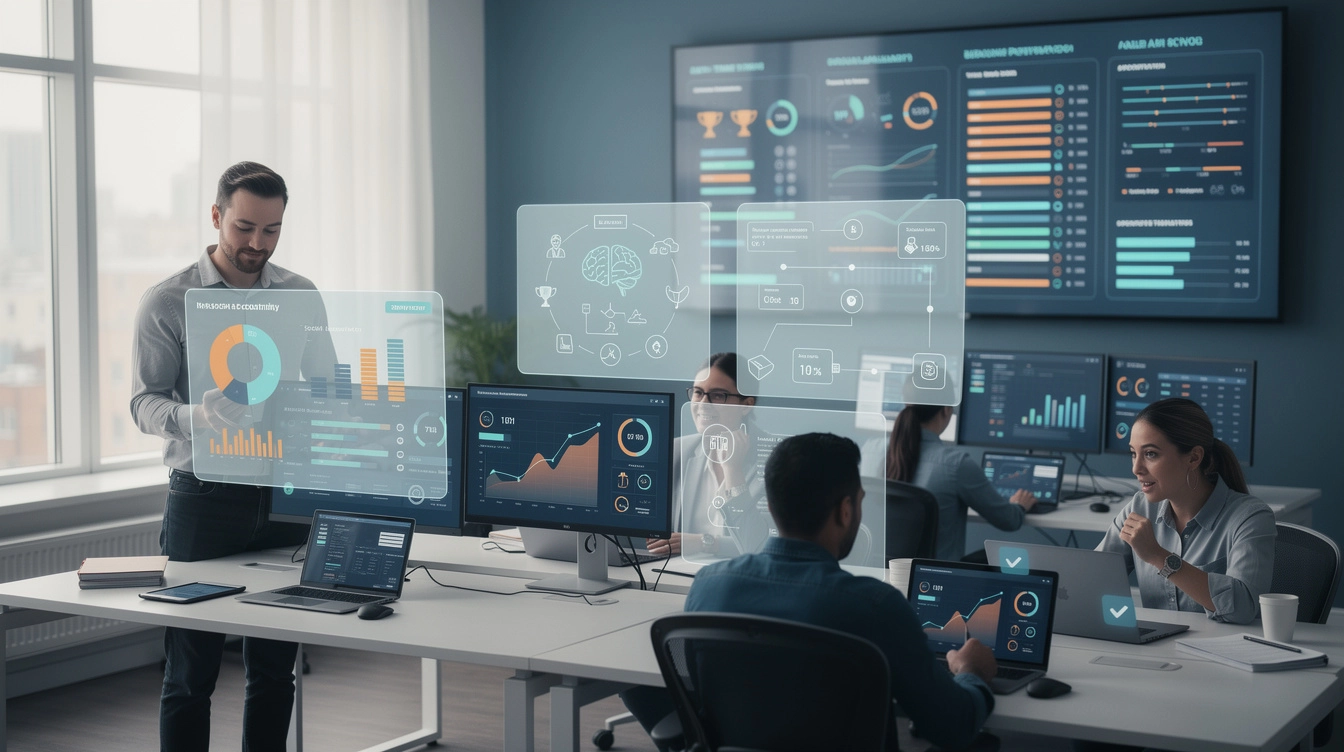
Team accountability represents one of the most significant challenges facing modern organisations, particularly as remote and hybrid work models continue to reshape traditional office dynamics. The absence of physical oversight has created new demands for transparency, performance measurement, and trust-building mechanisms that extend far beyond conventional management approaches. Time-tracking applications have emerged as powerful solutions that address these challenges through sophisticated monitoring, reporting, and analytical capabilities.
These digital platforms transform abstract concepts of productivity into measurable data points, enabling managers to make informed decisions about resource allocation, performance evaluation, and team optimisation. Rather than relying on subjective assessments or assumptions about work patterns, time-tracking technology provides objective insights that benefit both employees and employers. The implementation of these systems creates a foundation for mutual accountability where expectations become clear, achievements become visible, and inefficiencies become addressable.
The psychological impact of transparent time monitoring extends beyond simple hour logging. When team members understand that their contributions are documented and valued, they naturally develop stronger ownership over their tasks and outcomes. This shift from reactive to proactive work behaviour represents a fundamental change in workplace dynamics that modern businesses increasingly recognise as essential for sustainable growth.
Real-time performance metrics and transparency mechanisms in team management
Real-time performance monitoring has revolutionised how organisations approach team accountability by providing instant visibility into work patterns, productivity trends, and resource utilisation. Modern time-tracking platforms capture granular data that enables managers to identify bottlenecks before they become critical issues, whilst simultaneously empowering employees with insights into their own work habits and efficiency levels.
The transparency mechanisms built into contemporary time-tracking applications create a culture of openness where performance expectations are clearly defined and consistently measured. This visibility eliminates the ambiguity that often leads to misaligned priorities or unclear deliverables. When every team member can access relevant performance data, it becomes easier to maintain consistent standards across different projects and departments.
Billable hours tracking and client project allocation
Accurate billable hour tracking serves as a cornerstone of client relationship management and project profitability analysis. Professional services organisations rely heavily on precise time documentation to ensure fair client billing whilst maintaining sustainable profit margins. The automated tracking capabilities of modern platforms eliminate the guesswork and memory lapses that plague manual time-keeping systems.
Client project allocation becomes significantly more strategic when supported by comprehensive time data. Managers can analyse historical patterns to predict resource requirements for similar projects, identify which team members excel at specific types of work, and adjust pricing models based on actual time investment rather than estimates. This data-driven approach to project management reduces disputes with clients and improves internal resource planning.
Task completion rates and milestone achievement analytics
Task completion analytics provide deeper insights than simple time tracking by correlating time investment with actual deliverable outcomes. These metrics help identify whether extended time on tasks results from complexity, inefficiency, or inadequate skill sets. Milestone achievement tracking creates accountability checkpoints that keep projects on schedule whilst providing early warning systems for potential delays.
The analytical capabilities of modern platforms enable sophisticated performance correlation analysis. Teams can identify patterns between task complexity, time allocation, and quality outcomes, leading to more accurate project scoping and improved workflow design. This level of analysis transforms time tracking from a compliance exercise into a strategic business intelligence tool.
Productivity benchmarking through automated time capture
Automated time capture eliminates the compliance burden associated with manual time entry whilst providing more accurate productivity benchmarks. The technology runs seamlessly in the background, recording work patterns without disrupting natural workflow rhythms. This approach yields more reliable data for performance analysis and reduces the administrative overhead that often accompanies time-tracking initiatives.
Benchmarking capabilities enable organisations to establish realistic productivity standards based on actual performance data rather than theoretical expectations. These benchmarks become valuable tools for performance reviews, goal setting, and identifying training opportunities. The automated nature of data collection ensures consistency across different teams and time periods.
Cross-team visibility dashboards and progress indicators
Comprehensive dashboards provide stakeholders with customisable views of team performance across multiple dimensions. Project managers can monitor progress against deadlines, resource managers can track utilisation rates, and executives can assess overall departmental productivity. This multi-level visibility creates accountability at every organisational tier whilst maintaining appropriate access
controls so that sensitive details are only visible to authorised users. When implemented thoughtfully, these cross-team visibility dashboards reduce status-meeting overload, align distributed teams around shared metrics, and make it clear who is responsible for what at any given moment.
Behavioural psychology drivers behind time-tracking accountability systems
Behind every effective time-tracking implementation lies a set of behavioural psychology principles that explain why these tools improve team accountability. Time-tracking apps do more than collect data; they subtly shape how people prioritise tasks, manage focus, and respond to expectations. When managers understand these psychological drivers, they can design systems that encourage responsible behaviour without sliding into invasive surveillance.
Rather than forcing compliance, the most successful time-tracking strategies create an environment where employees want to work transparently. They tap into intrinsic motivation, social norms, and cognitive ease. This is what transforms a simple timesheet tool into a powerful accountability framework for both office-based and remote teams.
Hawthorne effect implementation in digital workspace monitoring
The Hawthorne Effect describes how individuals tend to improve their performance when they know their actions are being observed. In the context of digital workspace monitoring, ethical use of time-tracking applications harnesses this phenomenon to nudge employees towards more focused, intentional work. Knowing that their time allocation is visible encourages team members to reduce idle browsing and stay aligned with their key deliverables.
However, the goal is not to create a sense of constant scrutiny. Instead, organisations should communicate that time-tracking data is used for support and optimisation, not punishment. When people understand that monitoring exists to remove blockers, clarify priorities, and recognise effort, the Hawthorne Effect becomes a positive force that reinforces self-management rather than anxiety.
Gamification mechanics and achievement-based motivation models
Gamification introduces elements such as progress bars, streaks, badges, and scorecards to make time management more engaging. Many modern time-tracking apps incorporate achievement-based motivation models that reward consistent logging, on-time task completion, or sustained focus periods. These features turn otherwise mundane administrative tasks into small, frequent wins that keep motivation high.
When used carefully, gamification can drive healthy competition and personal improvement. For example, a sales team might track how much focused time is spent on outreach versus internal admin work, with weekly recognition for those who maintain strong client-facing ratios. The key is to avoid overemphasising raw hours; instead, gamified metrics should spotlight effective use of time in service of clear business outcomes.
Social accountability theory application in remote team structures
Social accountability theory suggests that people are more likely to follow through on commitments when they feel answerable to a group. In distributed and remote environments, time-tracking apps recreate this social visibility by making work progress transparent to colleagues, not just managers. Shared dashboards, team summaries, and project timelines all contribute to a sense that “we are in this together.”
When everyone can see how time is being invested across a project, it becomes harder for tasks to slip through the cracks or for workloads to become silently unbalanced. Team members are more likely to support colleagues who appear overloaded and to flag issues early when they see stalled progress. This peer-level accountability often has a stronger motivational effect than top-down oversight alone.
Cognitive load reduction through automated documentation processes
From a cognitive psychology perspective, one of the most underrated benefits of automated time tracking is the reduction of mental load. Instead of remembering to log tasks, reconstruct hours at the end of the week, or manually prepare reports, employees rely on background tracking and smart prompts. This frees up working memory for the strategic and creative tasks that actually move projects forward.
Think of it like using a navigation app instead of memorising every turn before a journey. By offloading routine documentation to the system, people experience fewer context switches and less decision fatigue. Over time, this improved mental clarity supports better planning, more accurate self-assessment, and ultimately stronger accountability for results rather than just activity.
Enterprise-grade time-tracking platform analysis and feature comparison
The time-tracking market has evolved from simple timers into a mature ecosystem of enterprise-grade platforms. Each leading tool offers a different emphasis: some prioritise ease of use and reporting, others focus on distraction analysis or detailed billing workflows. Understanding these distinctions is essential when you are choosing a time-tracking app for team accountability rather than solo freelancing.
Below, we examine several widely adopted platforms and how their core features support transparency, performance measurement, and responsible time management. This comparative perspective helps you match your accountability objectives with the right technical capabilities.
Toggl track advanced reporting and team performance analytics
Toggl Track has built a reputation around its clean interface and low-friction time capture, which are critical when you need high adoption across non-technical teams. Beyond simple start–stop timers, Toggl offers advanced reporting that breaks down hours by project, client, task, and team member. These reports allow managers to see where time is actually going and whether it aligns with strategic priorities.
For accountability, Toggl’s team performance analytics are particularly valuable. Workload views highlight who is overloaded or underutilised, and historical trends support more realistic forecasting. Because Toggl avoids heavy-handed monitoring (there are no default screenshots or keylogging features), it suits organisations that want transparency and structure without crossing into invasive surveillance.
Clockify project management integration and workflow automation
Clockify stands out as a flexible option for businesses that need to integrate time tracking directly into their existing project management stack. With native connections to tools such as Asana, Trello, and Jira, it allows employees to log time against tasks where they already work, reducing friction and improving data accuracy. This close alignment between tasks and time makes it easier to analyse how project plans translate into actual effort.
Workflow automation features further enhance accountability. Managers can set reminders for missing timesheets, configure approvals for overtime, or trigger alerts when budget thresholds are reached. By automating these guardrails, Clockify reduces the need for manual policing and helps teams maintain consistent, policy-aligned behaviour with minimal administrative effort.
Rescuetime focus score algorithms and distraction pattern analysis
RescueTime approaches time tracking from a different angle: instead of focusing on explicit task timers, it automatically categorises applications and websites to build a picture of how people actually spend their digital workday. Its focus score algorithms quantify the proportion of time spent on “productive” versus “distracting” activities based on custom definitions set by the organisation or individual.
This makes RescueTime especially useful for teams that struggle with digital distraction. Detailed distraction pattern analysis reveals when and where attention tends to drift—is it during long afternoons, after meetings, or when switching between tools? Armed with this data, managers and employees can design more focused schedules, protect deep-work blocks, and agree on norms for notifications and communication tools.
Harvest invoice generation and client billing transparency features
Harvest combines time tracking with robust invoicing capabilities, making it a popular choice for agencies, consultancies, and other service-based businesses. Teams log hours by client, project, and task, and Harvest converts this data directly into detailed invoices. This tight linkage between time entries and billing not only streamlines administration but also creates high levels of client billing transparency.
From an accountability perspective, Harvest ensures that both clients and internal stakeholders can see how billable hours accumulate over the course of an engagement. Itemised reports reduce disputes and encourage consultants to maintain accurate, real-time records rather than reconstructing time at the end of the month. Integrated expense tracking and budget alerts provide additional guardrails for project profitability.
Time doctor screenshot monitoring and activity level measurement
Time Doctor positions itself toward organisations that require more detailed oversight, particularly for fully remote or outsourced teams. In addition to traditional time logging, it offers optional screenshot capture, application usage tracking, and activity level measurement based on keyboard and mouse movement. These features aim to give managers confidence that billed or salaried hours reflect genuine work effort.
Such capabilities can support accountability in high-risk or compliance-sensitive environments, but they must be implemented with care. Clear communication, explicit consent, and role-based controls are essential to avoid eroding trust. When used transparently and paired with strong outcome-based metrics, Time Doctor can help organisations ensure that remote work arrangements remain fair and productive for all parties.
Implementation strategies for team accountability enhancement
Even the most sophisticated time-tracking platform will fail to improve accountability if it is introduced haphazardly. Success depends on thoughtful implementation strategies that balance structure with autonomy, and data with trust. How you roll out a time-tracking app often matters more than which specific tool you choose.
The following approaches help ensure that time tracking becomes a supportive framework rather than a source of resistance. They focus on aligning expectations, communicating purpose, and embedding time awareness into everyday workflows.
First, organisations should start with a clear narrative: why are we tracking time, and how will this data be used? Framing time tracking as a means to reduce burnout, improve project planning, and recognise effort makes it far more acceptable than presenting it as a way to “catch” underperformers. Involve employees early, invite feedback on policies, and be explicit about which metrics matter—and which do not.
Secondly, it is wise to pilot the system with a small group or a single department before a full rollout. This controlled environment allows you to test configurations, refine categories, and adjust reporting structures based on real-world usage. Early adopters can become internal champions who help colleagues understand the benefits and share practical tips for integrating time logging into their daily routines.
Training and enablement are equally important. Short, focused sessions should cover not only the mechanics of the tool but also best practices for honest, consistent time reporting. For example, encourage employees to log time in small, frequent increments rather than at the end of the day, and to categorise “unplanned work” so that hidden demands on their time become visible in reports.
Finally, embed time-tracking insights into regular management rhythms. Instead of treating timesheets as a separate compliance exercise, use them in one-to-ones, sprint retrospectives, and project reviews. Ask questions such as: Did this task take longer than expected? What interruptions affected our focus? How can we adjust scope, staffing, or processes next time? When people see that time data drives meaningful decisions, their commitment to accurate tracking naturally increases.
ROI measurement and performance correlation analysis in time-tracking deployments
To justify investment in time-tracking technology—and to continuously refine how you use it—you need a structured approach to measuring return on investment. The value of a team time-tracking app rarely appears in a single metric; instead, it emerges across productivity, profitability, compliance, and employee experience. Establishing clear baselines and tracking improvements over time is essential.
A practical starting point is to define the key performance indicators that matter most to your organisation. These might include billable utilisation rates, project overrun frequency, average time-to-completion for standard tasks, overtime spend, or the number of client billing disputes. By capturing these figures for several months before implementation, you create a reliable benchmark against which to measure progress.
Once the time-tracking system is in place, you can begin performance correlation analysis. For example, you might investigate whether teams that log time daily have fewer missed deadlines, or whether clearer visibility into workloads leads to a measurable reduction in burnout-related absence. Correlating time-data patterns with outcomes such as revenue per employee or client satisfaction scores can reveal which behaviours drive tangible business results.
From a financial perspective, ROI often appears in reduced administrative overhead and more accurate billing. Automated timesheets cut down on manual corrections, while granular project data helps you price future work more realistically. In many organisations, even a small percentage improvement in utilisation or a reduction in write-offs quickly offsets the cost of the software itself.
It is also important to consider qualitative returns. Do managers report better visibility and fewer surprise delays? Do employees feel that workload discussions are now grounded in facts rather than perceptions? These softer benefits, while harder to quantify, contribute to a healthier culture of accountability where time is treated as a shared, strategic resource rather than an individual burden to manage alone.